
Find Deed Records in Preble County
Preble County deed records are kept at the recorder's office in the courthouse in Eaton. You can look up deeds, mortgages, liens, and other land documents tied to real property in the county. The recorder maintains an index of all recorded instruments by grantor and grantee name. Whether you need a copy of a deed for a closing or want to check who owns a parcel, the Preble County Recorder is the place to start. Staff can help you search by name, parcel number, or legal description during office hours. Records here go back many years and cover all types of property transfers filed in the county.
Preble County Overview
Preble County Recorder's Office
Preble County Recorder Jeanne A. Creech is the official keeper of all land records in the county. The office sits at 101 E Main Street in Eaton. Under Ohio Revised Code Chapter 317, the recorder must accept, file, and index every document that meets state format rules. This includes deeds, mortgages, liens, leases, and powers of attorney. The Preble County Recorder indexes each document by both the grantor and grantee name so you can search from either side of a deal. Office hours run Monday through Friday from 8:00 to 4:30, though the courthouse doors lock at 4:00. You can reach the office by phone at 937-456-8173 or by email at jcreech@prebco.org.
Recording fees in Preble County follow the state schedule. The base cost is $34 for the first two pages and $8 for each page after that. Documents that fail to meet Ohio format standards face an extra $20 non-compliant charge. Section 317.114 sets those format rules: font size 10 or larger, paper between 8.5 by 11 and 8.5 by 14 inches, black or blue ink, one-inch margins, and a three-inch top margin on the first page. The preparer's name must show on any deed that transfers title, as Section 317.111 requires.
The Preble County Recorder's page provides contact details and basic info about the office.
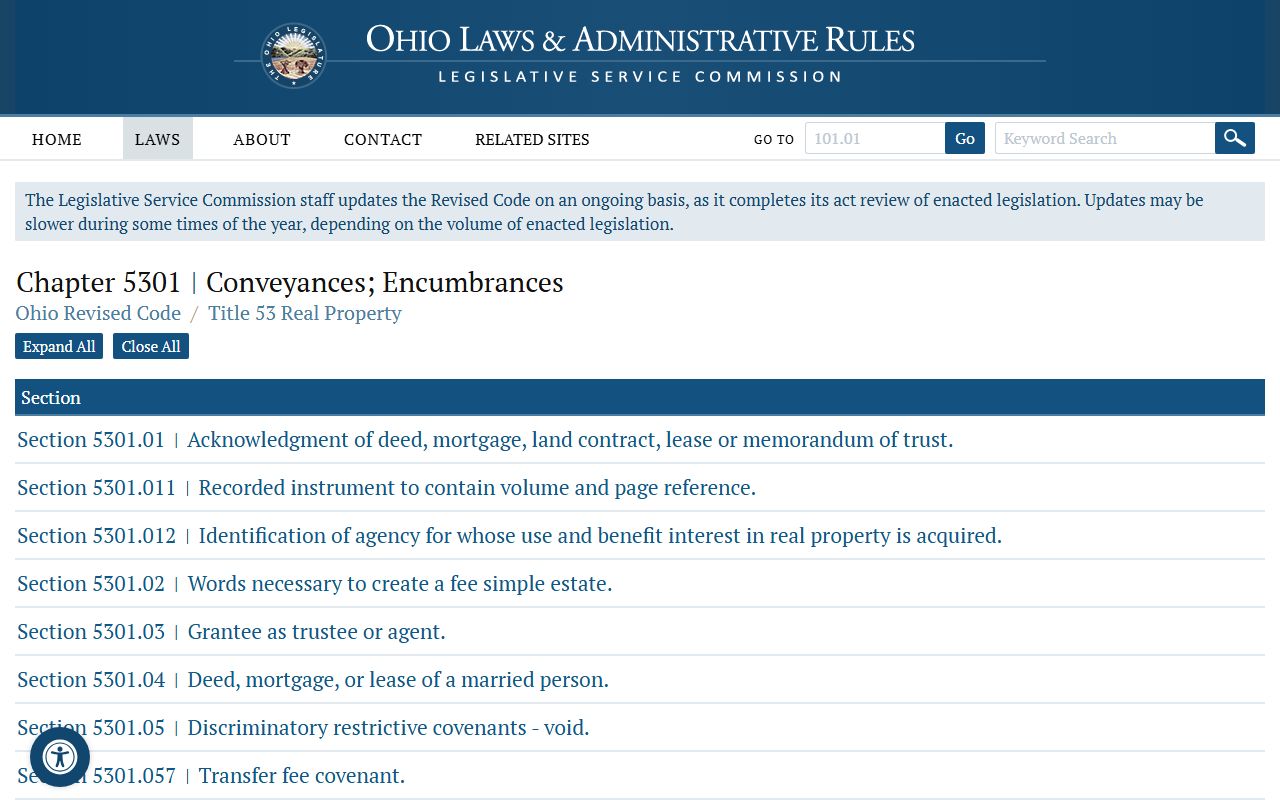
Ohio law sets the standards that all Preble County deed recordings must follow.
Search Preble County Deed Records
The Preble County Auditor maintains property valuation and tax records. You can look up parcels by owner name or address through the auditor's office. While the auditor focuses on tax data and assessed values, that information pairs well with the recorder's deed records to give a full picture of any property. If you need the actual recorded deed documents, contact the recorder's office directly.
The Ohio Recorders' Association connects the public with all 88 county recorder offices in the state and links to search tools where they are available. For Preble County, you can also check the Preble County Clerk of Courts for related property filings like mechanics liens and court judgments that may affect title to real property. The Clerk of Courts maintains records for the Common Pleas Court and the 12th District Court of Appeals, which can both produce documents that touch on land ownership disputes.
Note: The auditor's property search shows tax and valuation data only. For actual deed documents and recorded instruments, contact the Preble County Recorder at 937-456-8173.
Types of Preble County Deed Records
The Preble County Recorder handles many types of land documents. Warranty deeds and quitclaim deeds make up the bulk of recordings. But the office also processes mortgages, mortgage releases, assignments, and federal tax liens. Under ORC Section 5301.25, all deeds must be recorded in the county where the property sits. Until a deed is recorded, it can be treated as fraudulent against a later buyer acting in good faith.
Every deed filed in Preble County must meet legal requirements set by state law. Section 5301.01 says the grantor must sign the deed and have it acknowledged before a notary public, judge, or clerk of court. Names that are hard to read must be printed or typed below the signature per Section 317.11. Social Security Numbers cannot appear on recorded documents unless the law specifically calls for it, as set by Section 317.082. These rules protect property owners and keep the public record clean and safe for all who use it in Preble County.
Get Copies of Preble County Records
Anyone can get copies of deed records in Preble County. These are public records. You do not need to be named on the deed. Just visit the recorder's office during business hours, give them the property address or owner name, and staff will help you find what you need. Copies cost $2 per page. Self-service copies may cost less if available.
You can also request copies by mail. Send a written request to P.O. Box 371, Eaton, Ohio 45320. Include the property details and a check or money order for the copy fees made out to the Preble County Recorder. Add a self-addressed stamped envelope for return. Mail requests may take a few business days to process. For certified copies that carry the recorder's official seal, expect a higher fee. Certified copies serve for court filings, title insurance claims, and certain legal matters where you need an official stamp.
The county auditor also collects fees when property changes hands. The state conveyance fee is $1 per $1,000 of value, plus a $0.50 transfer fee per parcel.
Protect Your Preble County Property
Deed fraud can happen in any county. Property owners in Preble County should check the recorder's records from time to time for any new filings tied to their name or property. Many Ohio counties now offer Property Fraud Alert services that send an email when a document is recorded under your name. Check with the Preble County Recorder to see if this tool is up and running in the county.
When you use a notary for a deed, verify them through the Ohio Secretary of State's portal. Watch out for scam letters from companies that charge $83 to $89 for deed copies that cost $2 per page at the recorder's office. The Ohio State Bar Association can help you find a real estate lawyer if you think someone has filed a false deed against your Preble County property. Fast action matters in these cases.
Nearby Ohio Counties
Preble County borders several other Ohio counties. If you need deed records for properties near the county line, you may need to check the recorder in the next county over. Each county keeps its own deed records separately.